Inside LOOK: Medical Office Rollups
Medical Office Roll-Ups
How essential care clinics are being consolidated into regional platforms and what disciplined investors should look for before wiring a dollar.
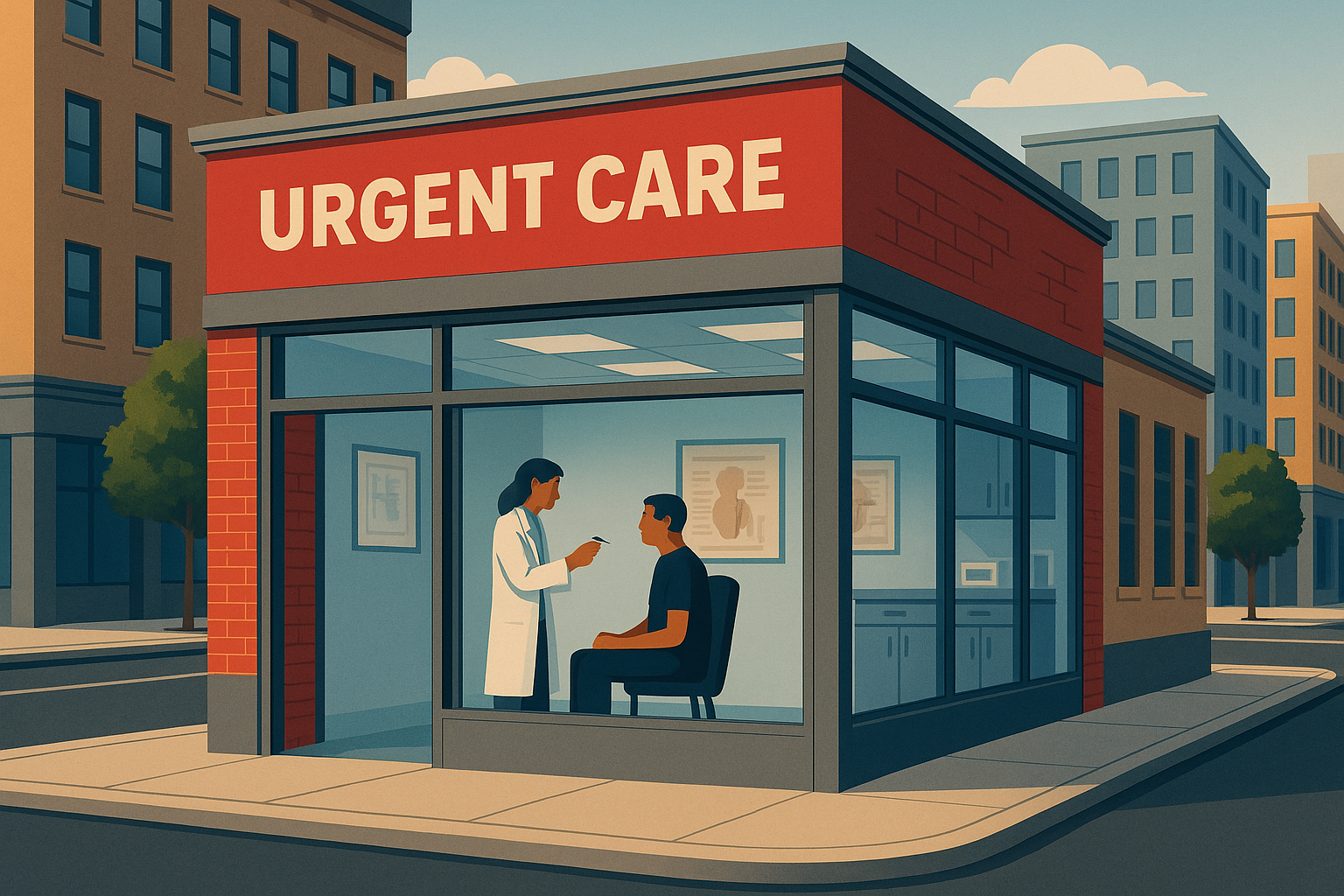
Across the U.S., independent primary-care and urgent-care clinics are quietly being acquired, modernized, and folded into regional medical groups. In many metro areas, the logo on the front door has changed, but the physician and staff inside have not, they’ve simply traded solo ownership for a larger platform that handles the heavy lifting.
For investors, these roll-ups sit in an unusual middle lane. They’re not hospital systems and they’re not venture-backed health-tech apps. They’re essential neighborhood clinics that see patients every day, bill insurers, and generate repeatable cash flow, now organized and operated as a single, scalable business.
Why Medical Offices Are Being Rolled Up
The story starts with pressure on solo practitioners. Rising compliance requirements, complex billing systems, staff shortages, and negotiating with payors make it harder for a single clinic to keep up. At the same time, communities still need easy-access care: annual checkups, sick visits, minor procedures, and urgent-care visits that keep people out of the ER.
Roll-up operators step into that gap. They acquire well-run clinics from physicians who want liquidity or lighter administrative burden, plug them into a shared operating system, and build regional density. Done well, the operator keeps the local feel of the practice while upgrading the systems that drive scheduling, billing, staffing, and growth.
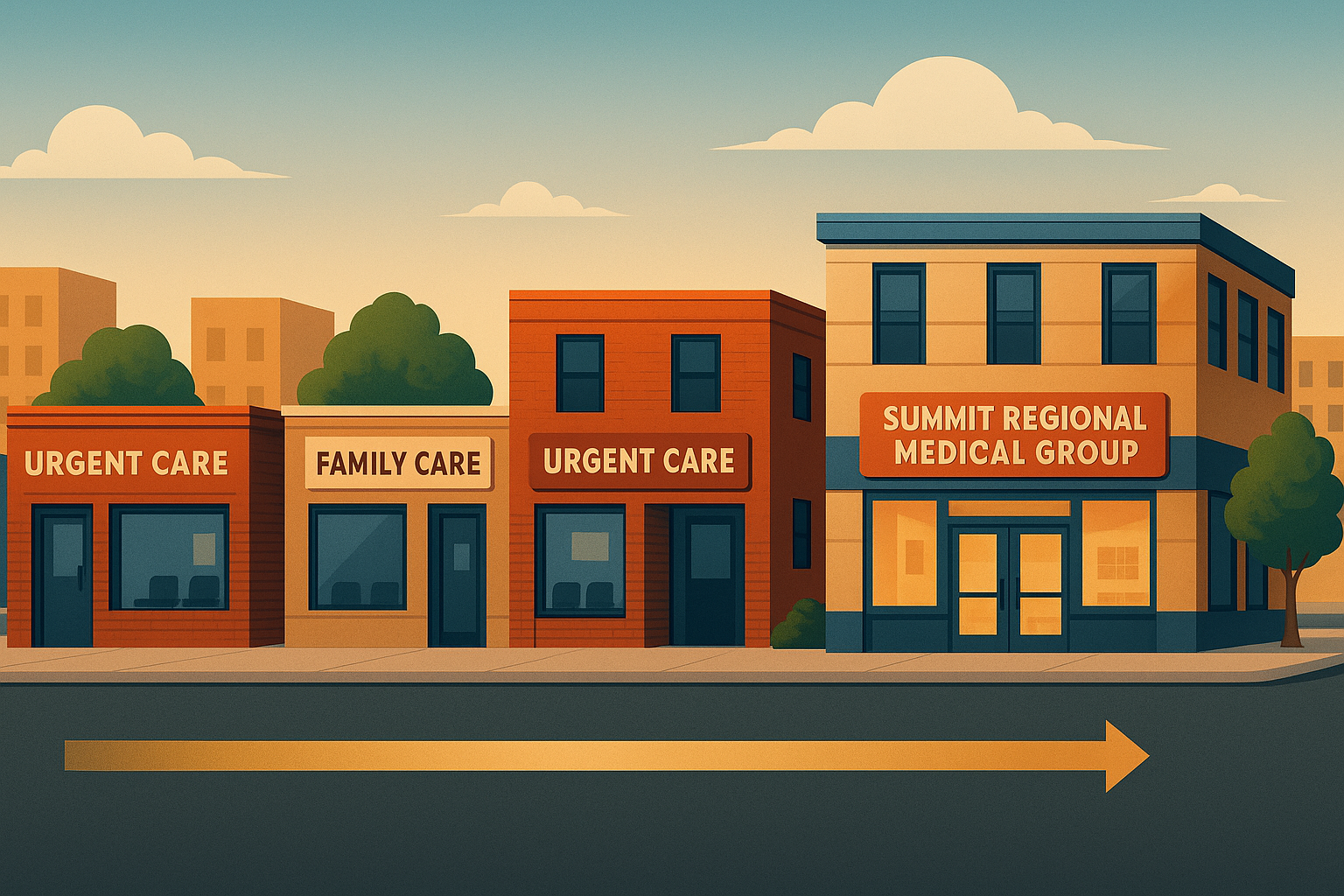
Once you see this pattern, it’s hard to unsee it. Most “new” medical logos in a city aren’t new clinics; they’re existing locations that have been brought under one umbrella to share infrastructure and grow as a unified platform instead of a collection of single offices.
What a Medical Office Roll-Up Actually Is
At its core, a medical office roll-up is a strategy for turning many independent clinics into one operating company. Instead of owning a single urgent-care center or primary-care practice, the operator builds a cluster: multiple locations in a region, all running on the same playbook.
Investors typically participate through a private placement A private securities offering under an SEC exemption, often Regulation D, where capital is raised from accredited investors without a public stock listing. . Capital is pooled in an SPV or fund, which acquires equity in the operating company that owns and manages the clinics. The better the operator is at running the platform, the more durable the cash flow and the more valuable the company becomes over time.
Inside the Structure
You don’t need to be a healthcare operator to follow the wiring. Most medical roll-up offerings follow a similar path: investor capital flows into an entity that owns clinics, those clinics see patients and generate revenue, and the cash flow is distributed back to investors after expenses, debt service, and reserves.
Where the Value Is Created
The roll-up itself doesn’t magically create value. The engine is operations. The operator earns their keep by making clinics run better together than they did alone: more consistent scheduling, smarter staffing, stronger revenue-cycle management, and the ability to add services that a single clinic couldn’t support.
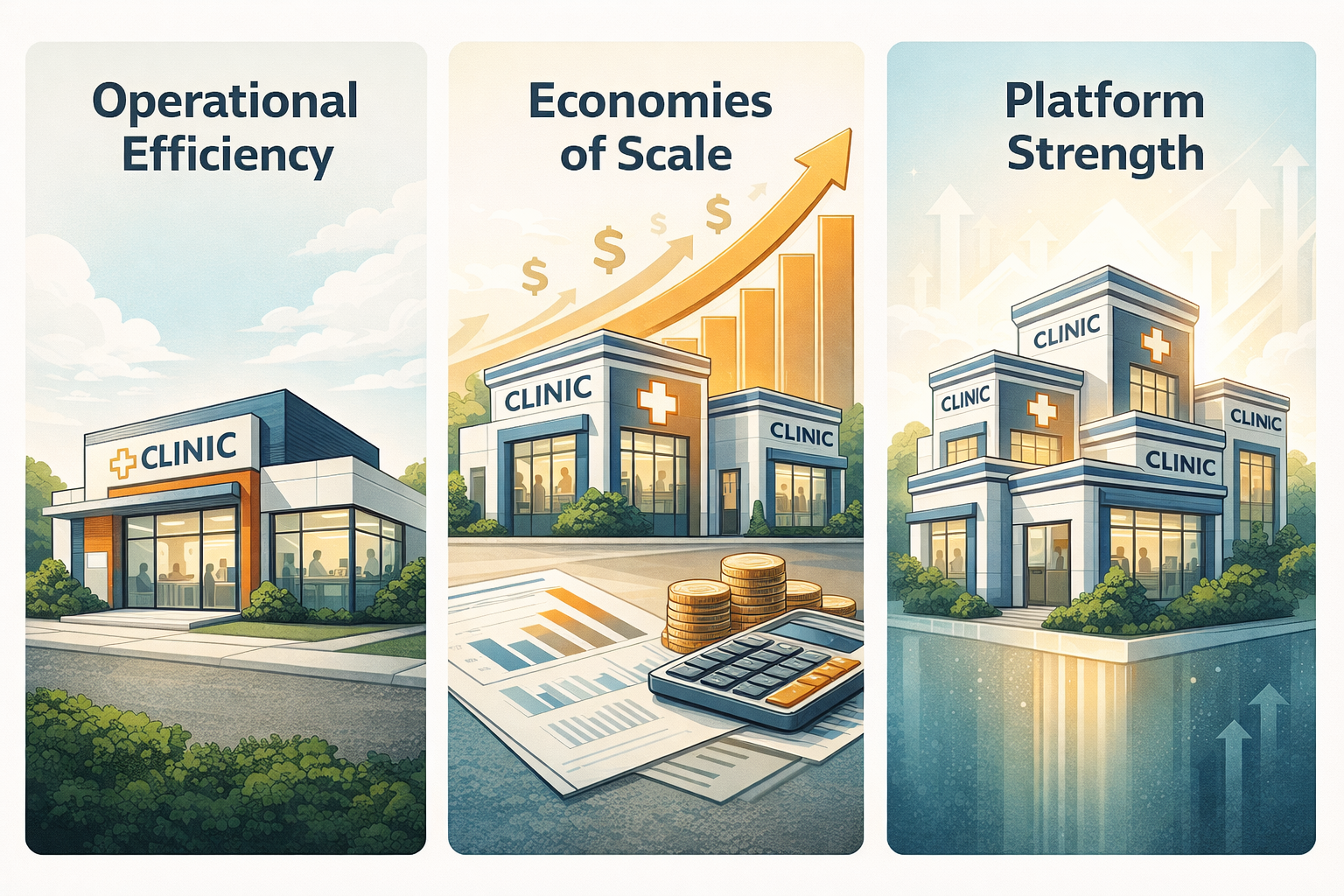
In practice, that looks like standardized playbooks across locations, centralized billing and collections, shared clinical protocols, and a training model that helps new staff ramp quickly. The platform’s strength is measured not just by how many clinics it owns, but by how reliably it can apply its operating system to each new acquisition.
Common Value-Creation Levers in Medical Roll-Ups
- Centralized billing and collections to reduce claim denials and speed receipts.
- Shared scheduling and call-center support to lift visit volume per clinic.
- Group purchasing for supplies, labs, and equipment to lower operating costs.
- Extended hours or weekend care where demand supports additional coverage.
- Adding in-demand services (imaging, basic procedures, telehealth) to existing locations.
- Physician and mid-level provider recruiting through a unified brand and culture.
A Fictional Example: Summit Regional Medical Group
To make this concrete, imagine a fictional operator: Summit Regional Medical Group (SRMG). Summit focuses on urgent-care and primary-care clinics in a fast-growing metro area. Instead of building from scratch, they acquire existing clinics from physicians who are ready to de-risk their personal balance sheets and hand off the administrative burden.
Investors participate through a private offering that provides the equity needed for acquisitions and growth capital. Debt financing covers the rest of the purchase price, with conservative leverage and fixed or hedged interest where possible. The goal isn’t to flip clinics, but to turn a loose collection of offices into a durable, cash-flowing platform.
Summit Regional Medical Group — Illustrative Roll-Up Structure
Example Offering: Private medical roll-up • 7 clinics over 3 years • Accredited investors only
- Senior debt: ~60–65% of total project cost
- Preferred or structured equity: ~10–15%
- LP common equity: ~18–25%
- Operator co-invest: 2–5% alongside investors
Good records, established patient base
RCM (Revenue Cycle Mgt), scheduling, clinical workflows
Imaging, extended hours, telehealth
- Preferred return typically in the 6–8% range to LPs.
- Profit split commonly 70/30 or 80/20 after pref and return of capital.
- Leverage often held to 1–2x EBITDA, with fixed or hedged interest when available.
- Target hold period of 5–7 years, with potential refinancing event that can return a portion of investor capital if performance supports it.
Driven by visit volume, scheduling efficiency, and SG&A leverage
breakeven + predictable visit cadence
From improved throughput, provider utilization, and centralized admin
Numbers change from deal to deal. What matters most is the operator’s discipline, how they buy, how they run the clinics, and how they turn operational gains into investor returns.
Where This Model Breaks, And What to Watch
Every roll-up has edges. Medical platforms are no exception. The clinics still rely on people, payors, and local demand. Understanding where this model can crack doesn’t make it less attractive; it makes it clearer and more honest.
Risk & Control — Questions to Ask Every Operator
| Risk | How a disciplined operator mitigates it |
|---|---|
| Provider churn or burnout | Invests in culture, manageable patient loads, and clinical leadership; uses a training hub to onboard new hires quickly without compromising care. |
| Reimbursement pressure from insurers | Maintains a balanced payor mix, negotiates as a larger platform, and focuses on essential visit types that stay in demand through cycles. |
| Integration drag after acquisitions | Runs a repeatable integration playbook with clear timelines for systems, staffing, and reporting; limits clinic onboarding volume to maintain quality. |
| Overuse of leverage | Keeps debt conservative, favors fixed or hedged rates, and stress-tests cash flow against slower growth or delays in reimbursement. |
Who Medical Roll-Ups Are Really For
Medical roll-ups tend to attract the same type of investor who is drawn to multifamily housing or essential-service operating businesses: people who want durable cash flow backed by everyday demand. They’re less interested in trading headlines and more interested in understanding how a specific platform earns its keep.
It fits best for disciplined, accredited investors who:
The structure won’t be for everyone. But for investors who already think in terms of cash flow, downside protection, and operator discipline, a well-run medical platform can be a compelling way to participate in the demand for everyday care.
Once you understand how these platforms actually make money, visit by visit, clinic by clinic, you stop seeing them as abstract “healthcare deals” and start seeing them as systems that either earn your trust or don’t.
Next Step — Compare Structures, Not Hype
If this Inside L00K helped clarify how medical roll-ups actually work, the next move isn’t to chase the first offering that crosses your desk. It’s to compare how different operators structure their platforms, share economics with investors, and report results over time.
If you’d like to compare notes on how I evaluate medical and other essential-service platforms in practice, we can walk through it together in plain English.
Disclaimer: The information provided in this article is for educational purposes only and does not constitute financial, legal, or investment advice. Investing in private equity or any cash-flowing business carries inherent risks, including potential loss of capital. This article does not endorse or recommend any specific investment, business, or strategy. Readers should consult with their own financial, legal, and tax advisors before making any investment decisions.