Start Here: Private Markets Aren’t Better.

You Did Everything Right.
So why does your money still feel structurally exposed?
Your income works. Your net worth grew. But what that money is actually for, what it is meant to produce, replace, or support, feels unclear.
That tension is not a mindset problem. It is a money structure problem.
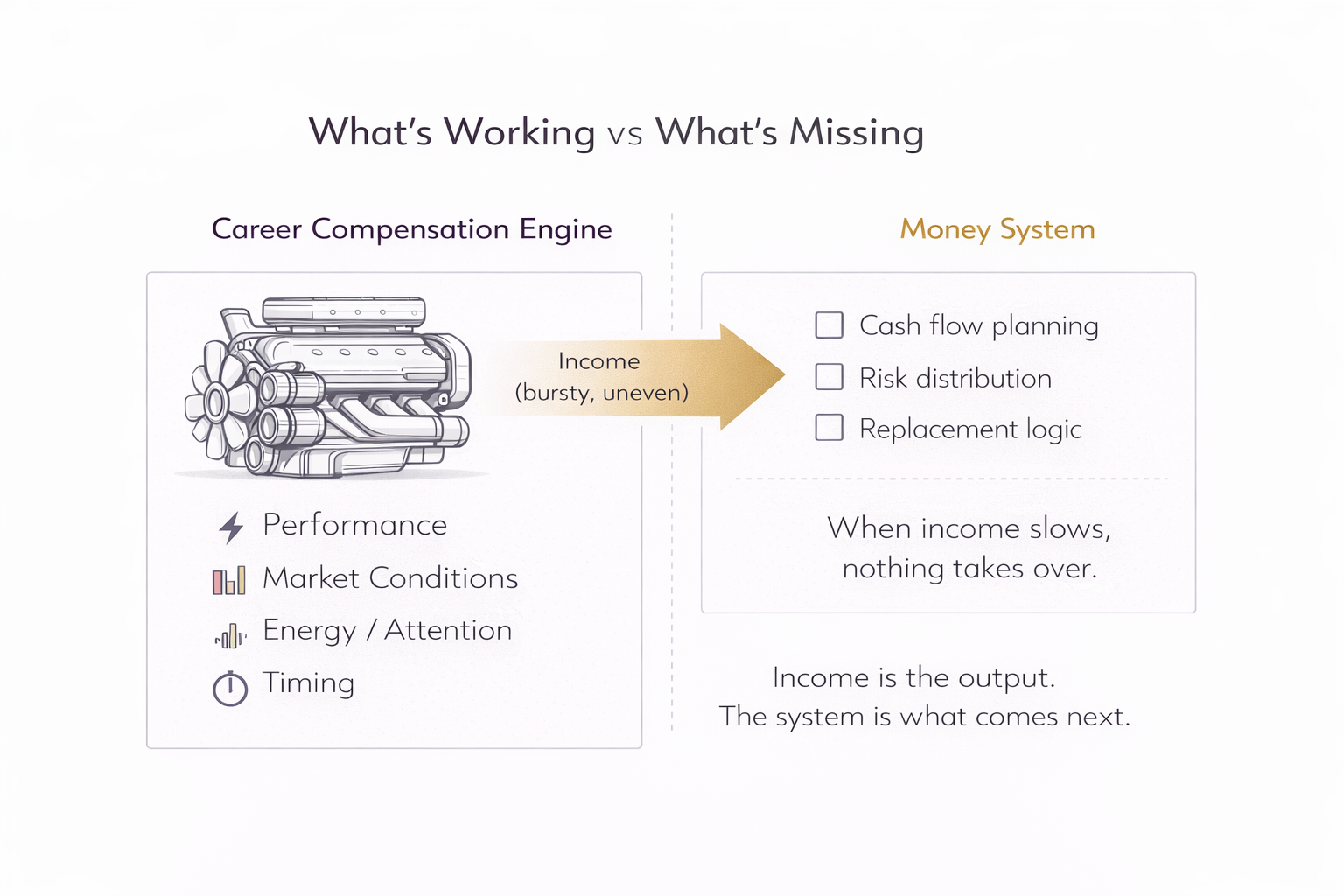
Most high earners accidentally build a powerful career compensation engine. Commissions, equity, bonuses, exits. What they never build is a money system that converts those outcomes into dependable cash flow.
You learned how to earn. You were never taught how to turn what you have earned, income, equity, and net worth, into cash that pays bills, funds life, or replaces work.
This is not about making more money. It is about building a money system. One that converts concentrated wealth into income you can actually rely on next.
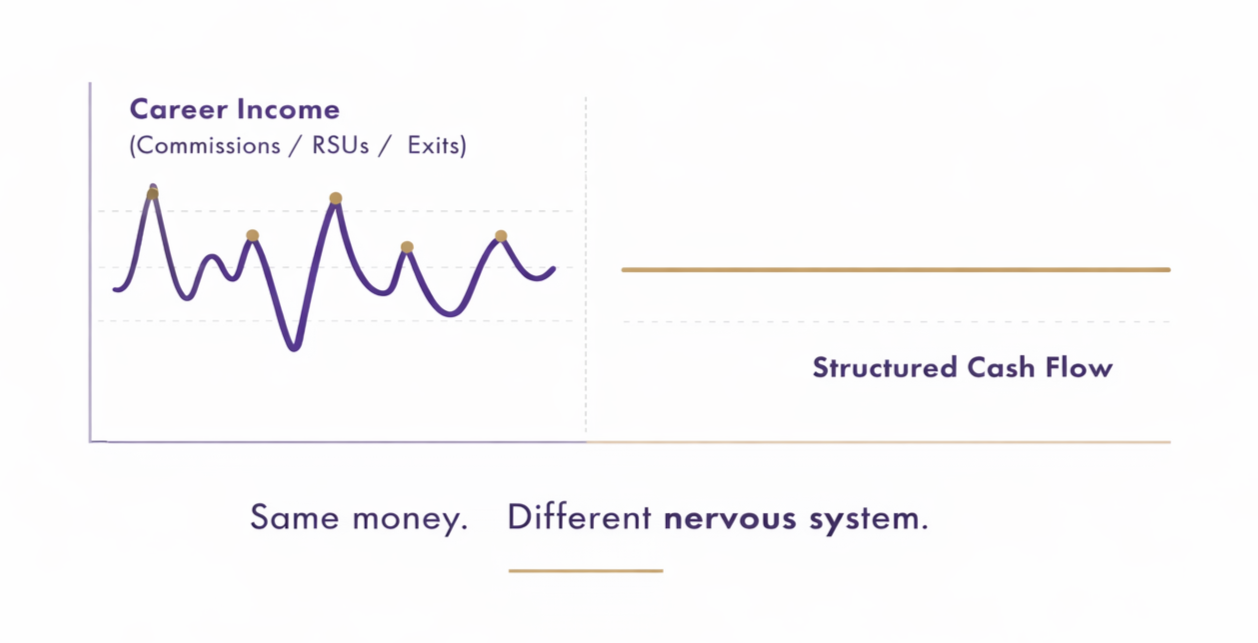
This is not a mindset problem.
It is a money structure problem.
When income arrives in waves instead of paychecks, the problem becomes easier to spot.
A breakout commission year.
A meaningful RSU vest.
A liquidity event that changes the scale of decisions.
These moments are not luck. They are the result of your competence and effort.
And still, even with strong income and discipline, the money itself can feel exposed.
The Pattern No One Warns You About
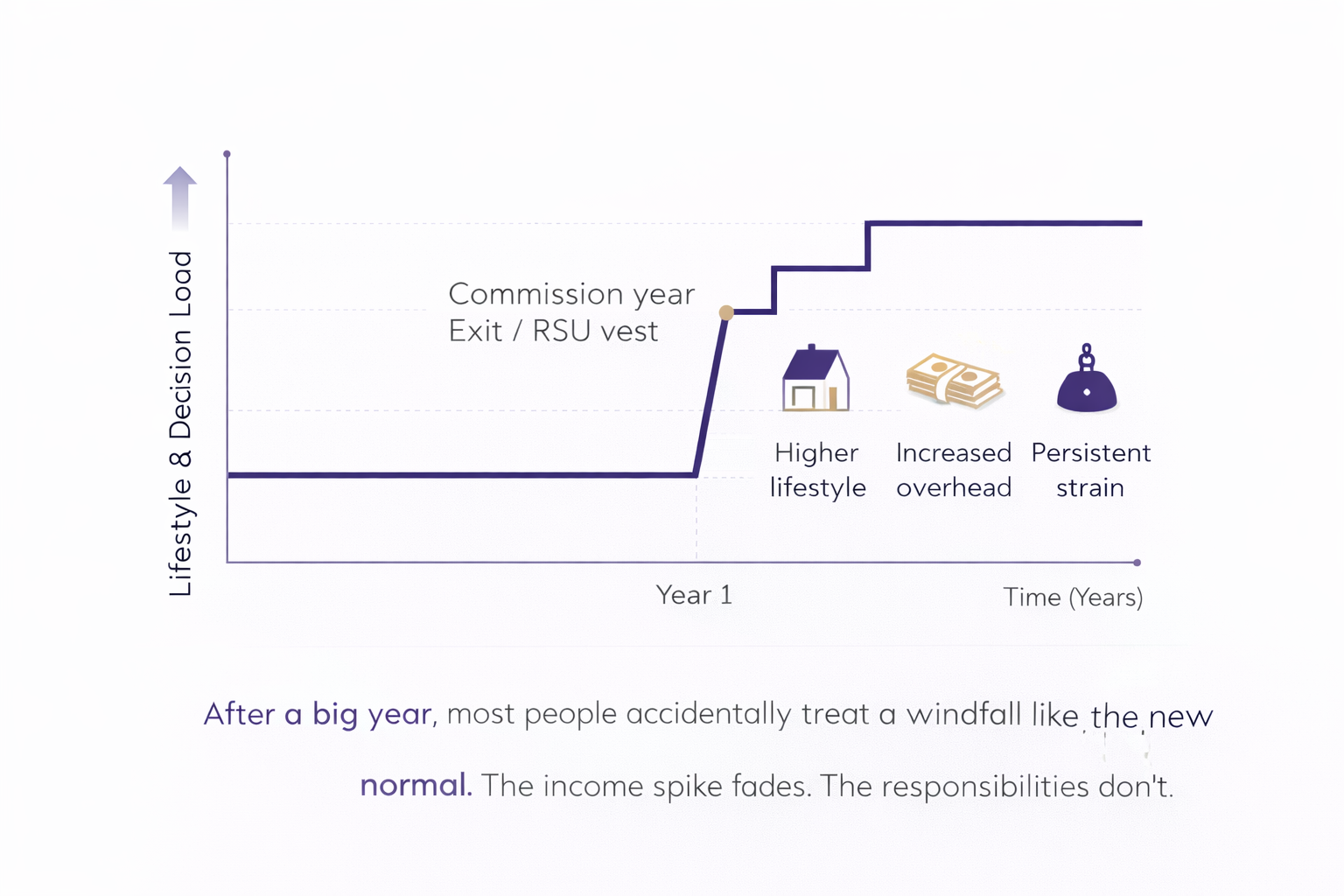
After a big year, most people start treating that income as normal.
The spike fades.
The commitments stay.
The lifestyle rarely resets.
It does not matter whether the money came from commissions, equity compensation, or a liquidity event. Once it is in your account, your lifestyle adjusts.
Income becomes uneven.
Risk stops being diversified and starts being personal.
Each decision carries more weight than it should.
You can earn $400 to $600k a year and still feel uncertain about what the next smart move is.
Not because you lack discipline or intelligence, but because no one teaches the shift from earning money to allocating it intentionally.
The Mistake Smart People Make Without Realizing It
The Three Phases of Income Most People Never See Clearly
Most people think about money in two stages: working years and retirement. There are actually three.
"I could stop working."
"I do not want to work like this anymore."
"But I am still years away from retirement."
People do not struggle because they lack discipline. They struggle because they never built for Phase 2.
The Fork People Feel but Rarely Name
This question does not show up because you are ready to stop working. It shows up because your income structure has not caught up to your life.
I could stop working.
But I do not know what would replace it.
This is not a retirement question.
It is a systems question.
You do not decide when to stop working.
You build a money system that makes stopping optional.
At this stage, money has to do three jobs at the same time:
Protect capital.
Produce income.
Grow selectively, without chaos.
Intelligence is not the constraint.
The job changed.
Public markets are excellent at growth.
They are inconsistent at protecting capital during transitions.
They are mediocre at producing reliable income.
That is design.
Which is why analytical people begin re-evaluating the role their money needs to play next.
Not to chase returns, but because the function of money changes.
At this stage, the real cost is not volatility.
It is how much mental bandwidth your money consumes.
You are trying to remove dependency.
This is what it looks like when the money system is finally doing the work.

Where Back9 Fits, and Where It Doesn’t
"Most people don’t need a new strategy yet.
They need help naming the phase they’re actually in."
Back9 isn’t here to help you make money.
You already did that.
We exist for people who earned well, took smart risks, and don’t want to start over.
People who want optionality without chaos.
People who care more about durability than dopamine.
The work here is translating lumpy income into structure.
Systems over products.
Clarity over noise.
If you’re looking for speed, hype, or guarantees, this won’t resonate.
If you’re looking for calm, confidence, and income that shows up without permission, this is what that phase looks like.
How to Use This Site
Back9 isn’t meant to be read straight through. It’s a decision map.
You don’t need everything here.
You need the piece that matches your phase.