You Did Everything Right.
You Did Everything Right
So why does your money still feel unfinished?
You’re not broke. You’re not reckless. But you’re also not settled.
This isn’t a mindset problem.
It’s a money structure problem.
If your income comes in waves instead of paychecks, this will feel familiar.
Some years you earn more than you ever imagined.
Maybe it was a monster commission year.
A breakout run as a sales leader.
A big RSU vest.
A liquidity event from selling a company.
Not because you got lucky.
Because you’re good at what you do.
And yet, despite the income, the discipline, and the intelligence, something still feels unresolved.
That quiet tension isn’t a mindset issue.
It’s a money structure problem.
There’s a reason this tension shows up at exactly this stage of a career like yours.
Most people don’t notice it until years have already slipped by.
This isn’t a mindset problem.
It’s a money structure problem.
The Common Thread No One Talks About
Here’s the part most people miss.
Whether your money came from equity, commissions, or an exit, once it hits your account, it becomes the same problem.
You can have a $400k year and still feel unsure what the right next move is.
Because no one teaches you how to transition from earning money to deploying money with intention.
And without that transition, even very smart people stall out in subtle ways.
The Mistake Smart People Make Without Realizing It
Most high earners accidentally build a career compensation engine, not a money system.
It works beautifully until it doesn’t.
Your income is tied to performance.
It’s tied to market conditions.
It’s tied to your energy, attention, and presence.
Even equity, as powerful as it is, remains concentrated and job-dependent.
At some point, a new question shows up:
If I slowed down, or stopped, what actually replaces this?
That’s the moment many people drift.
Not because they’re careless, but because the map quietly disappears.
If you’re in the phase where your career is still working, but your money hasn’t fully caught up yet, this is usually where the friction starts.
A Plain-English Way to Think About Income
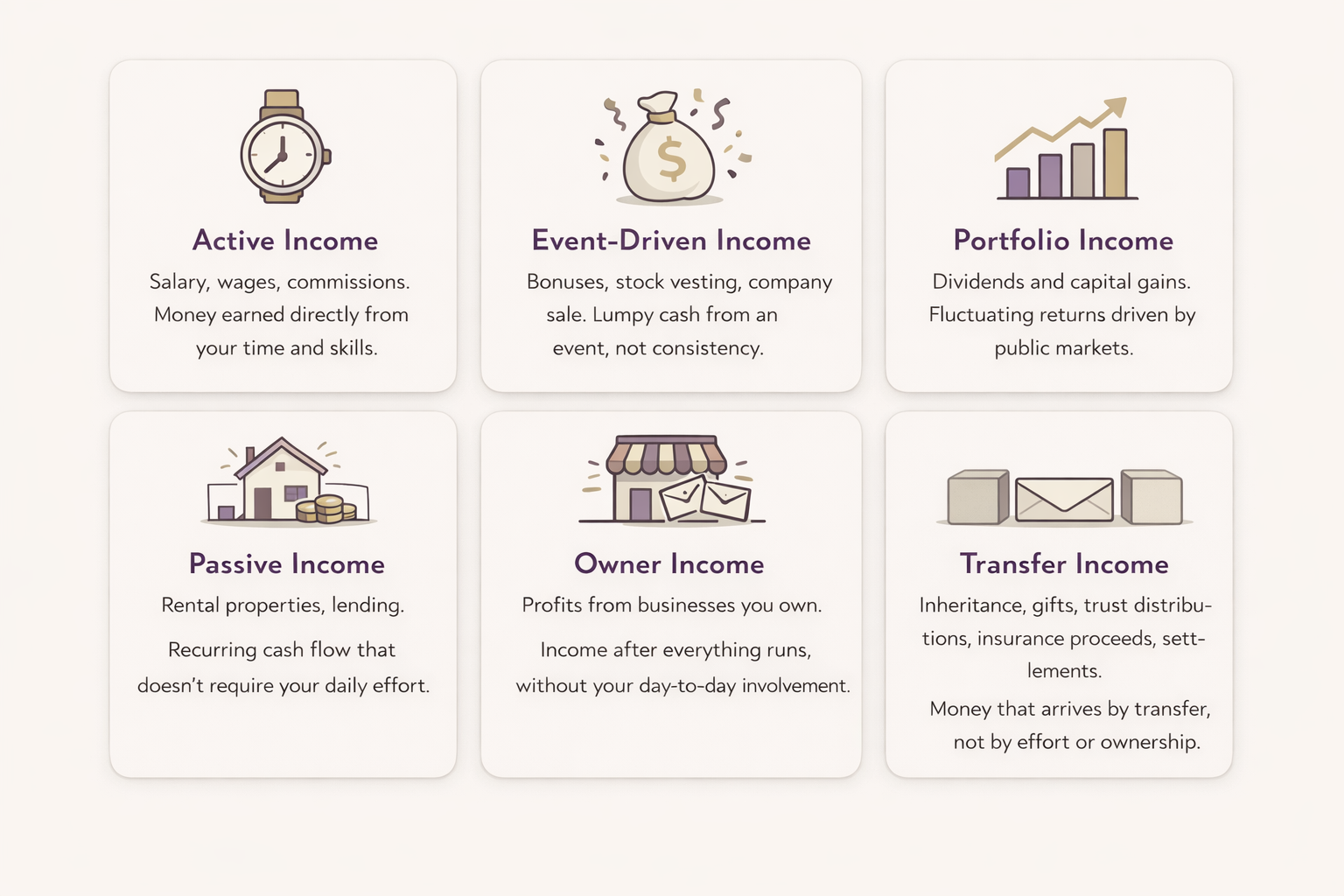

Some income systems ripen early. Some take time. The mistake is treating everything like it should mature on the same timeline.
The Fork Most People Feel but Rarely Name
But I’m not sure I should.
At this stage, money has to do three jobs at the same time:
Protect capital.
Produce income.
Grow selectively, without chaos.
Public markets are excellent at growth.
They are inconsistent at capital protection during transitions.
They are mediocre at producing reliable income.
That’s not a criticism. It’s just design.
Which is why many grounded, analytical people begin looking toward private markets.
Not to chase returns, but because the function changes.
Private markets aren’t better.
They’re built for a different phase of life, and they reward people who think about downside before upside.
Where Back9 Fits, and Where It Doesn’t
Back9 isn’t here to help you make money.
You already did that.
We exist for people who earned well, took smart risks, and don’t want to start over.
People who want optionality without chaos.
People who care more about durability than dopamine.
The work here is about translating lumpy income into intentional structure.
Systems, not products.
Clarity, not noise.
If you’re looking for speed, hype, or guarantees, this won’t resonate.
If you’re looking for calm, confidence, and income that shows up without permission, you’re in the right place.
How to Use This Site
Back9 isn’t meant to be read straight through. It’s a decision map.
Short Read
Quick orientation pieces. One model at a time. Designed to help you recognize what kind of tool you’re actually looking at.
Deep Dive
Branded Inside LOOK articles. Longer, calmer breakdowns that unpack how cash flow works and where disciplined investors pressure-test risk.
Most people find one Short Read that makes them pause longer than expected. That’s usually the right place to keep going.