The Affordable Housing We Already Built
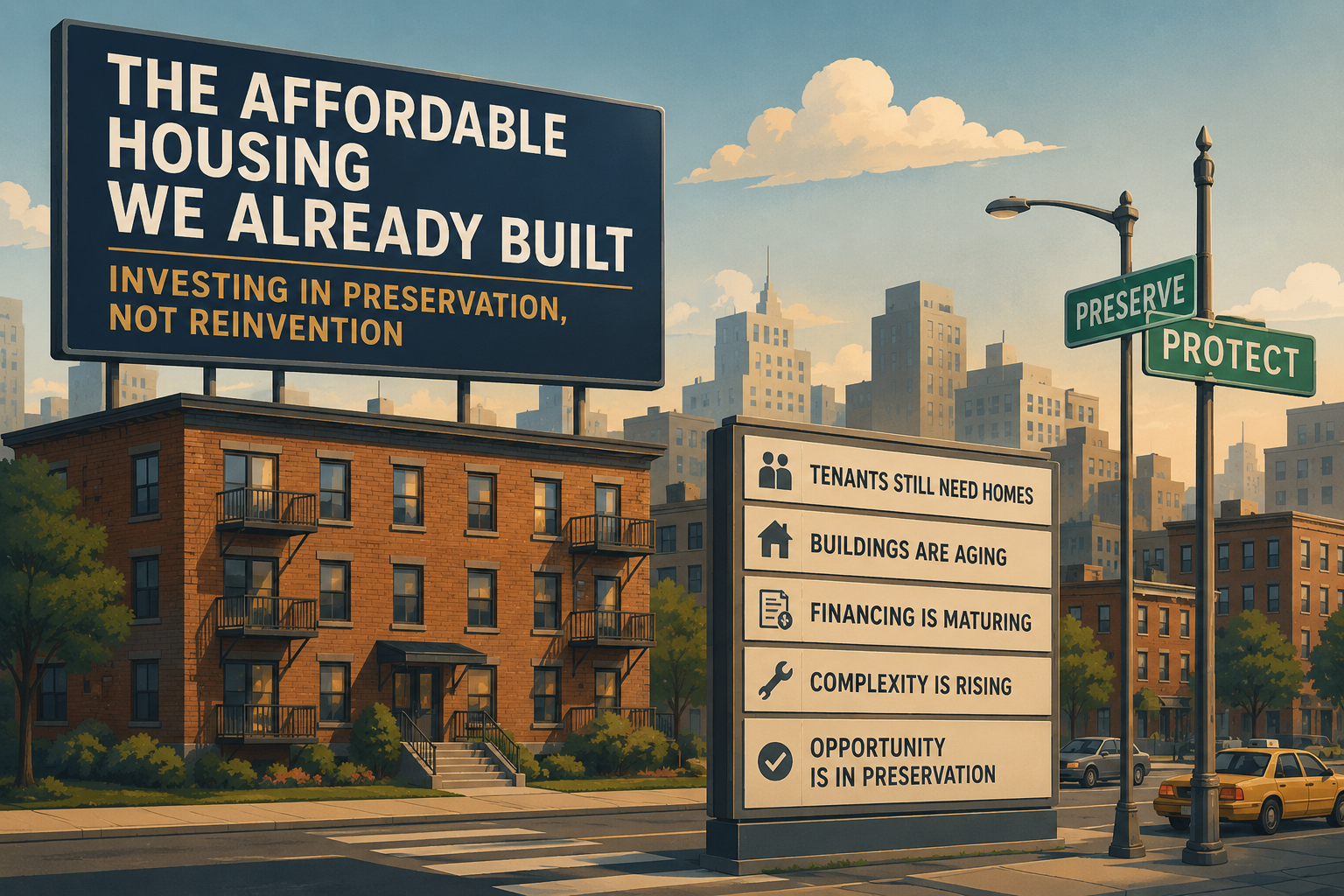
When I see USDA, I think rib eye steak, not apartment buildings.
But USDA Rural Development has been involved in rural housing for decades, and understanding why helps explain an unusual transition now taking place across thousands of aging apartment properties.
The town needs apartments. The hospital needs nurses. The school needs teachers. Local businesses need employees. Those people need somewhere reasonably priced to live.
Suppose the cost of construction and conventional financing means he needs to charge $1,200 a month to make the project work.
But people in the community can afford $600 or $700.
The developer doesn't need an economics degree to figure this out.
He's not building the apartments.
The demand exists. The math doesn't.
That basic problem is one reason USDA Rural Development created programs such as Section 515 Rural Rental Housing.
The government wasn't trying to become the landlord. Private and nonprofit owners still developed and operated the properties.
But favorable financing could help make a property economically possible in a place where conventional financing couldn't.
Then there's a second piece that is easy to confuse with the first: Section 521 Rental Assistance.
Think about an approved rent of $800.
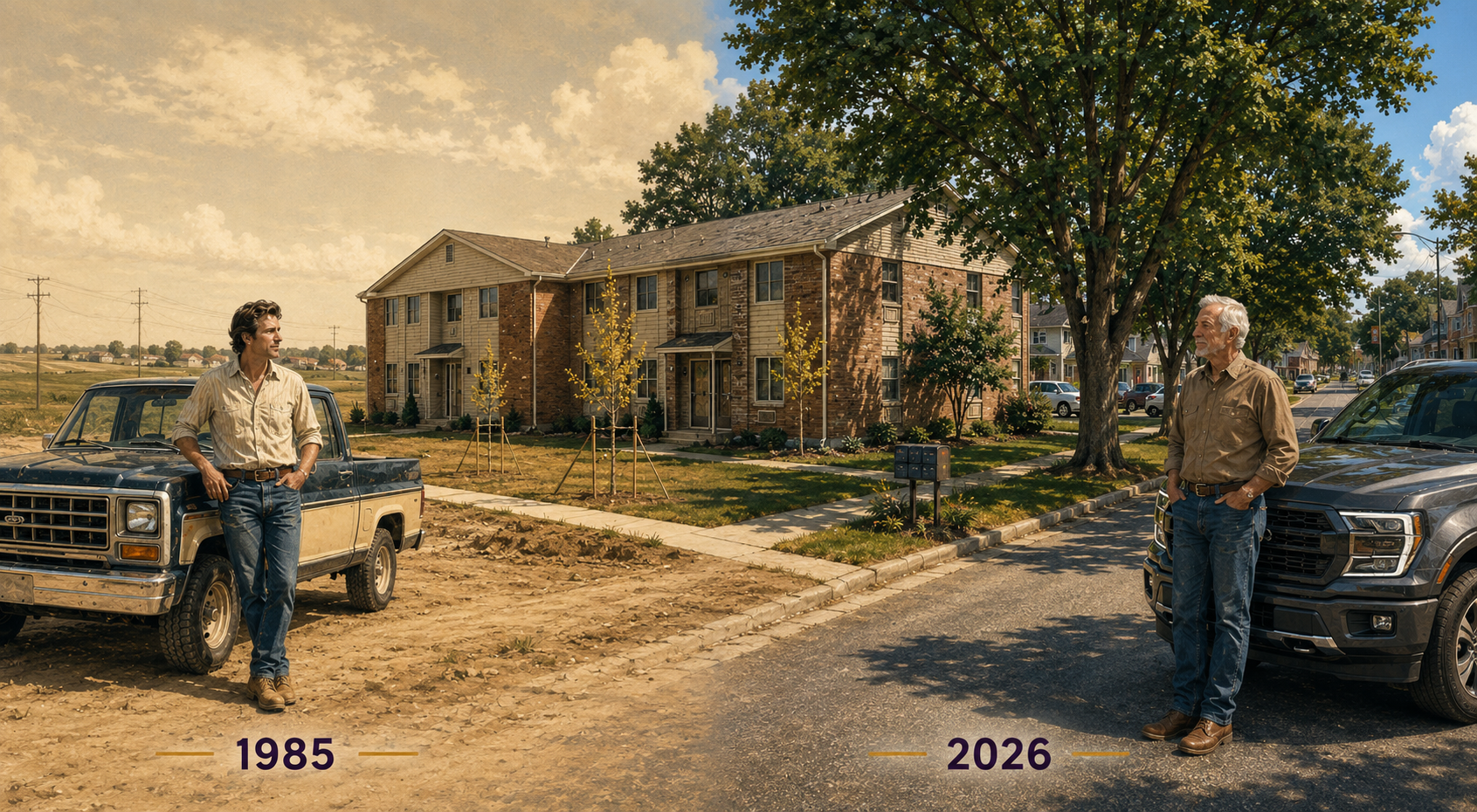
Now Fast-Forward 40 Years
Our hypothetical developer built those apartments in 1985. Maybe he built another 40 units two towns over. Then another 60 somewhere else.
He wasn't Blackstone.
Many properties in this market were developed and owned by smaller regional developers, private ownership groups and owner-managers. A 2025 academic study of the Section 515 portfolio specifically found that owner and manager characteristics were meaningful predictors of whether properties exited the program.
1985
Property gets built.
2026
Owner, building and financing are all older.
Now it's 2026. Our developer is 75.
His kids have careers and aren't particularly excited about inheriting a collection of 40-year-old, federally regulated apartment buildings scattered across rural towns.
The owner isn't the only thing getting older.
The roofs and mechanical systems have aged. Management and compliance still require work. And the long-term financing structure surrounding the properties is aging too.
Saying “the USDA program is expiring” isn't quite right. The program isn't disappearing. Individual properties are simply reaching the end of their original mortgages and regulatory arrangements at different times.
When that happens, the property reaches a decision point.
What Can Happen Next
Transfer → Recapitalization → Preservation → Restructuring → Program Exit
The apartment building doesn't expire. The original financial and regulatory wrapper around it does.
That can create a problem for the current owner.
And potentially an opportunity for the next one.
When market structure, credit conditions, or capital flows shift, I send a short analysis of what it means for risk, liquidity, and cash flow resilience.
Only when something actually changes.
Get the next Back9 Signal →
What Exactly Are You Buying?
This is where the easiest comparison may be a gas station. If I buy a gas station, obviously I'm buying real estate.
But gasoline isn't really the interesting part.
The economics depend on everything surrounding that real estate: zoning, permits, underground tanks, distribution relationships, traffic, convenience-store operations and the infrastructure that allows that particular property to function as a gas station.

An old New York City taxi provided an even more extreme example. The car wasn't particularly special. You could buy another Crown Victoria.
The car was replaceable. The medallion was not.
The medallion was the scarce part.
Rental assistance
Affordability restrictions
Preservation programs
Regulatory approvals
Operating structure
So the underwriting question isn't merely:
There isn't one answer for every property. And that's important.
You can't simply buy an old USDA property, fill out a form and magically receive a new subsidy structure.
Figuring out what can legally and economically be done with each property is part of the expertise.
The Seller Has a Problem Too
Now go back to our 75-year-old developer. He may own 60 apartments that people genuinely need.
But he's also looking at:
Aging buildings
Regulated rents and tenant requirements
Compliance and paperwork
Financing approaching maturity
Capital improvements
Continuing affordability obligations
A next generation that may have no desire to take over
Paying off an old mortgage doesn't necessarily mean he can immediately double the rent and sell the property like an ordinary market-rate apartment building. Preservation requirements, tenant protections and program rules can affect what happens next.
So his decision isn't simply, “Do I like this investment?”
“Do I really want to spend the next ten years figuring all of this out?”
Some owners will. Some won't.
That's where ownership succession becomes part of the investment thesis. For the right buyer, the seller's complexity may be part of the acquisition opportunity.
Small Properties, Big Operational Problem
There's another wrinkle.
A 32-unit federally regulated apartment property in a rural town isn't terribly exciting to a giant institutional real estate manager.
Small enough to be ignored.
Complicated enough to require real expertise.
It's small. It's complicated. It requires specialized knowledge.
And acquiring one won't move the needle.
But a 32-unit property still needs accounting, compliance, maintenance, financing and professional management.
Put 30 or 50 similar properties onto a specialized platform and the economics can begin to look different.
Owner-managed Section 515 properties were almost 2.5 times more likely to exit the program than properties where management was outsourced.
Managers associated with exiting properties also tended to manage fewer buildings.
That doesn't prove consolidation creates better returns.
It does suggest that this may be an operating-scale problem as well as a financing problem.
And institutional preservation transactions already demonstrate the concept.
One Georgia Preservation Transaction
Some properties contained only 10 to 52 units and were difficult to finance efficiently individually, so they were pooled into a much larger preservation transaction.
That's a pretty familiar investment concept hiding inside a very unfamiliar corner of real estate:
Take fragmented assets that are difficult to own individually and put them inside a platform capable of handling the complexity at scale.
So where does the investor return actually come from?
Preserving affordable housing may solve a real housing problem, but that alone doesn't make it a good investment. The next questions are financial: How are these properties acquired? Where can value be created? How does rental assistance affect the rent roll? What can go wrong? And what separates a capable operator from someone who simply found an old apartment building?
I built the Back9 Analyst so you can pressure-test those questions yourself.
Ask it how the model works, where returns may come from, what the major risks are, or how this compares with conventional multifamily.
- Where do investor returns in preservation deals actually come from?
- How does Section 521 Rental Assistance affect risk?
- What happens when the original USDA financing matures?
- What should an investor look for in a sponsor doing these deals?
- What would have to go wrong for this investment thesis to fail?
Back9 Analyst Terminal
The Back9 Take
America talks constantly about how difficult it is to build affordable housing.
Fair enough.
But we already spent decades building hundreds of thousands of these apartments.
Mortgages
Owners
The housing need
Now some of the buildings, mortgages and owners are all getting old at approximately the same time.
The tenants haven't disappeared.
The need for affordable housing hasn't disappeared.
So somebody has to figure out what happens next.
For investors, that's what makes this niche worth understanding.
the gasoline isn't really the point.
the car wasn't the scarce asset.
As always, I'm happy to compare notes on this or other private investment models.

This article is for educational purposes only and does not constitute investment advice or an offer to sell securities.